
Film production technology standards have moved the industry away from a patchwork of proprietary tools toward a set of shared, globally accepted process frameworks. Where a production once assembled its own chain of cameras, drives, colour tools and delivery formats, the major studios, standards bodies and technology alliances have spent the last decade converging on a common architecture: media created and kept in the cloud, described in open data formats, secured against a single vendor benchmark, and delivered through component masters that serve every territory at once. This is not a trend list. It is a defined operating model, and productions that align to it move faster, budget more predictably and protect their content more reliably than those that improvise.
This document maps the frameworks that now function as the industry’s process levers, from the MovieLabs 2030 Vision that sets the direction to the interchange, colour, security and delivery standards that implement it, and shows how a production applies them on a working shoot. The through-line is simple: each standard replaces a private, improvised choice with a shared one, and the shared choice is what lets a shoot anywhere plug into a global pipeline.

The 2030 Vision: The Industry’s Shared North Star
In 2019 MovieLabs, the research venture jointly owned by the major Hollywood studios, published a whitepaper titled The Evolution of Media Creation. Universally referred to as the 2030 Vision, it has since been adopted across the supply chain as the reference point, the north star, for where production technology is heading. It sets out ten principles, and the value of the document lies less in any single principle than in the fact that studios, vendors and facilities now measure their roadmaps against one shared target rather than a dozen competing ones.
The Three Pillars
The ten principles group into three pillars. The first is a cloud foundation: media is created and kept in the cloud, so assets no longer shuttle between facilities on physical drives. The second is security and access built on zero trust, where protection travels with the asset itself rather than sitting on a network perimeter. The third, and the most technically consequential, is software-defined workflows: individual media elements are referenced through a universal linking system, workflows are non-destructive and assembled dynamically, and a common data model lets applications understand and exchange the same media without conversion.
Why a Shared Framework Matters
A shared framework is what lets tools interoperate and lets a production move between vendors and territories without re-formatting at every hand-off. It also lets local execution plug into the same pipeline as a facility anywhere else in the world, so the on-the-ground work a line producer in India coordinates on an Indian shoot feeds the same cloud, colour and delivery chain a Los Angeles or London post house expects. The rest of this document is, in effect, the set of concrete standards through which that interoperability is actually achieved.
Who Sets the Standards
These frameworks carry weight because they are governed by neutral, industry-wide bodies rather than any single vendor. SMPTE, the Society of Motion Picture and Television Engineers, is the standards body behind ACES and the Interoperable Master Format. MovieLabs, owned jointly by the major studios, authored and stewards the 2030 Vision. The Academy of Motion Picture Arts and Sciences originated ACES, and the Academy Software Foundation, hosted under the Linux Foundation, maintains the open-source stack, OpenColorIO, OpenEXR, MaterialX and OpenTimelineIO, and liaises with the Alliance for OpenUSD on scene description.
On the security and delivery side, the Motion Picture Association owns the Trusted Partner Network and publishes the Content Security Best Practices, while bodies such as the Digital Production Partnership run production-technology and content-security programmes that many broadcasters and platforms require of their suppliers. The common thread is that these are membership or consortium bodies, not commercial products, so a standard they publish is one a production can build a pipeline around without betting on a private vendor’s roadmap.
That neutrality is the reason the standards hold. A colour space, a master format or a security control that belongs to no one, and is agreed by everyone, is what allows a camera vendor, a visual-effects house and a distribution platform to interoperate at all. It is also why the safest technology decisions a production makes are the ones that follow an established standard rather than a proprietary shortcut, however capable that shortcut looks in isolation.
In short, each standard maps to a distinct problem and a distinct point of adoption:
| Standard | Governing body | What it solves | When to adopt |
|---|---|---|---|
| MovieLabs 2030 Vision | MovieLabs (studios) | Overall direction: cloud, zero-trust, software-defined | The reference every roadmap is measured against |
| Camera-to-cloud | Frame.io and peers | Collapses the shoot-to-post gap | First, for same-day dailies review |
| ACES | Academy / SMPTE | Consistent colour from capture to archive | First, on any multi-facility shoot |
| OpenUSD | Alliance for OpenUSD / ASWF | Universal 3D scene interchange | Deeper 3D and visual-effects pipelines |
| IMF (SMPTE ST 2067) | SMPTE | One component master for every territory | Once a title serves multiple territories |
| TPN | Motion Picture Association | Content-security certification benchmark | Before assets move to any vendor |
| Virtual production / ICVFX | ILM StageCraft, Unreal (reference) | In-camera final backgrounds | When the creative brief calls for it |
The Cloud Foundation and Camera-to-Cloud Capture
The cloud pillar is already operational rather than aspirational. Camera-to-cloud workflows, popularised by Frame.io Camera to Cloud, send camera-original proxies from the set to editorial, colour and visual-effects teams within minutes of a take, while systems such as Colorfront carry camera-to-post colour and metadata through the same route. Remote supervision follows: a director or client can review and approve from another continent while the unit is still shooting.
Mechanically, the camera or an on-set device uploads a lightweight proxy the moment a take is recorded, tagged with the same metadata as the camera original. Editorial can cut with it that evening, a visual-effects vendor can begin a temp the same week, and the heavy original files follow through a managed transfer rather than a courier. The gap between production and post, once measured in days of shipping, collapses to the time it takes to upload a proxy.
The effect is that the asset, not the crew, does the travelling, which changes how money moves as much as how media does. When dailies reach a distributed team the same day, cost and approval decisions happen live, which is one reason film cash flow engineering has become a discipline in its own right for cross-border productions rather than an accounting afterthought.

OpenUSD: The Universal Scene Description Standard
If the 2030 Vision asks for a common data model, OpenUSD is the clearest example of it in production. Universal Scene Description was created at Pixar and open-sourced, and in August 2023 Pixar, Adobe, Apple, Autodesk and NVIDIA formed the Alliance for OpenUSD to standardise its development, with a formal liaison established in 2024 to the Academy Software Foundation to coordinate on USD and MaterialX. OpenUSD is the open format for describing, composing and exchanging complex 3D scenes across otherwise incompatible tools.
Its power is composition. Rather than flattening a scene into a single file, USD layers contributions from many departments, so a set, a scanned location, a lighting pass and a visual-effects environment can be referenced and interrelated as one non-destructive scene and each team can keep working on its own layer. That is the practical answer to the interchange problem that used to force an export-and-rebuild at every stage of a 3D pipeline.
Around it sits a wider open-source stack governed by the Academy Software Foundation, including OpenColorIO for colour interchange, OpenEXR for high-dynamic-range imagery, MaterialX for look transfer and OpenTimelineIO for editorial data, while Pixar’s RenderMan remains a reference renderer for final imagery. Together these give the industry a non-proprietary spine for 3D, imaging and timeline data that no single vendor owns.

Editorial and Delivery Interchange: OTIO and the Non-Destructive Chain
The same open-standards logic now reaches editorial. OpenTimelineIO, an Academy Software Foundation project, is an open format for exchanging editorial timelines, cuts and metadata between systems that historically could not read each other’s projects. An assistant editor can move a cut, its track structure and its references from one application to another without rebuilding the edit by hand, which matters most on productions split across editorial, visual effects and finishing teams in different cities.
Taken together with OpenUSD and camera-to-cloud, the result is the non-destructive chain the 2030 Vision describes. A media element is referenced, never copied and re-copied; a change made upstream is inherited downstream; and the version a financier signs off is provably the version that ships. That provenance, the ability to trace any frame in a delivery back through the pipeline to the take it came from, is the quiet foundation on which the colour, security and delivery standards all sit.

Colour and Delivery: ACES and the Interoperable Master Format
ACES Colour Management
The Academy Color Encoding System, created by the Academy of Motion Picture Arts and Sciences and standardised through SMPTE, is the industry’s non-proprietary, end-to-end colour framework. ACES manages colour across the full life cycle of a production, from image capture through editing, visual effects, mastering and archival, so the filmmaker’s intent is preserved as the material passes between cameras, facilities and displays.
It works by transforming every camera’s output into one common working space through an input transform, letting artists grade and composite in that neutral space, and then mapping to each display through an output transform. Because the system is free and standards-based rather than tied to any manufacturer, it functions as the shared colour language every vendor in a chain can rely on, which is precisely why global productions with many facilities standardise on it.
IMF Component Mastering
At the delivery end, the Interoperable Master Format, defined in the SMPTE ST 2067 family, replaces a shelf of full-length flat masters with a single component-based master. One IMF package holds shared video and audio components plus the small supplemental elements each territory or platform needs, described by a composition playlist that assembles the right version on demand.
IMF is built to carry high-dynamic-range imagery, wide colour gamut, object-based immersive sound and access services, and a dedicated application, ST 2067-50, even carries uncompressed ACES essence. Streaming platforms, Netflix prominent among them, published IMF-based delivery specifications that turned the standard from an option into a practical requirement for global distribution, so a title mastered once now serves dozens of territories without a fresh conform for each.

Content Security: The Trusted Partner Network Benchmark
Security is the pillar with the sharpest commercial edge, because a single leak of dailies, a rough cut or an unreleased title can cost a studio tens of millions. The Trusted Partner Network, owned by the Motion Picture Association and launched in 2018 with the Content Delivery and Security Association, is the industry’s answer: a single certification benchmark that every vendor on a production is measured against, so a studio does not audit each supplier from scratch.
It is built on the MPA Content Security Best Practices, now at version 5.0, which extended the scope from physical sites and work-from-home setups to cloud and software-application security. A vendor is assessed against those controls, its gaps are recorded, and remediation is tracked, which gives a production a common, verifiable picture of who is safe to hand assets to before a single file moves.
TPN is, in practice, the vendor-level implementation of the 2030 Vision’s zero-trust principle. For a production this means content security is handled as part of film production risk and insurance management rather than as a bolt-on, and in newer shooting markets it has to be planned in step with the permit governance those jurisdictions require, so that a certified pipeline and a legally cleared shoot advance together instead of colliding at the last minute.

Virtual Production and In-Camera Visual Effects
LED Volumes and Real-Time Engines
In-camera visual effects, shot against large LED volumes, is now a mature part of the toolkit rather than an experiment. The landmark reference is ILM’s StageCraft, the LED-volume system built for The Mandalorian, which demonstrated the approach at scale and effectively wrote the playbook the industry has followed since. Most virtual-production stages are driven by a real-time engine, with Epic’s Unreal Engine the dominant one, so the final background is lit and captured in camera and the director, cinematographer and effects supervisor see the finished frame as it is shot.
Behind the volume sits a defined pipeline: previsualisation and technical visualisation plan the shot, a control team often called the brain bar runs the engine, and genlock and camera tracking keep the rendered frustum locked to the lens so parallax reads correctly. It is a technical discipline in its own right, which is why it is planned from previs rather than improvised on the day.
Generative Environments and Budget Impact
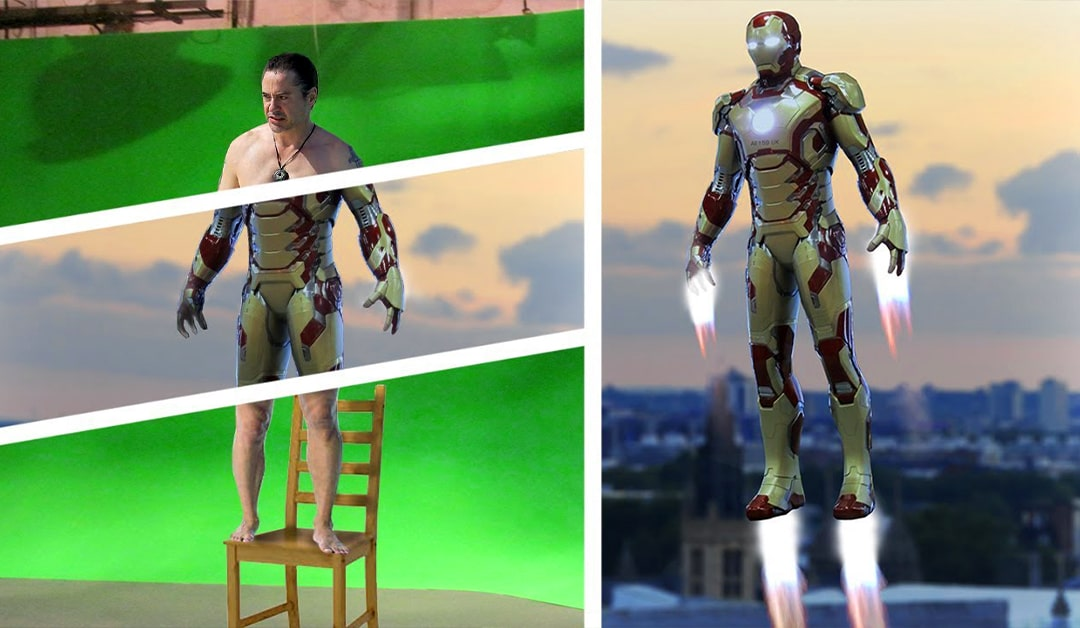
Machine learning now assists the pipeline, generating and managing complex environments, textures and lighting for real-time use. The economics have followed: LED panel costs have fallen roughly thirty to forty per cent since 2019, bringing in-camera VFX within reach of productions in the low single-digit millions rather than only tent-pole budgets. Because a photoreal background exists on set, reliance on green screen and heavy post is reduced, which is what lets virtual production hold both the schedule and the budget in a way traditional VFX-heavy workflows rarely could.

AI in Production Intelligence
Beyond the set, machine learning has moved into the planning and control layer. Predictive scheduling engines model how a schedule will actually behave under weather, location and cast constraints; budget-forecasting systems flag cost volatility before it lands rather than after; and localisation tools speed subtitling and dubbing for multi-territory release. Metadata is the connective tissue: when every clip, asset and cost carries structured data from capture onward, the production has a live picture of where it stands instead of a reconstruction assembled at wrap.
The practical payoff is that this live data feeds the film cost coding and reporting layer directly, so a production accountant sees committed and actual spend against the plan in near real time. That continuity, from the metadata a camera writes to the cost report a financier reads, is the quiet part of the technology story, and it is where most of the real budget control actually comes from.

The Adoption Path for a Production
None of this requires a production to adopt every standard at once, and the ones that try usually stall. The workable path is to treat the frameworks as a maturity ladder. A first step is a camera-to-cloud dailies route and an ACES colour pipeline, because both pay back immediately in review speed and colour consistency and neither demands new infrastructure. Security certification of the core vendors comes next, since it gates everything that follows, and IMF-based delivery follows naturally once a title has multiple territories to serve.
Virtual production and OpenUSD-based pipelines are the deeper commitments, worth it where the creative brief genuinely calls for them and over-engineering where it does not. The judgement of which lever to pull, and when, is a production decision rather than a purely technical one, and it is best made against the actual shape of the shoot: its territories, its effects load, its delivery obligations and its budget tolerance. A standard adopted for its own sake is cost; a standard adopted because the production needs what it does is leverage.

Applying the Standards on a Working Production
A standard only matters when someone enforces it on the floor, and that is the operational job. Across a shoot, the colour pipeline has to be set to ACES and honoured by every vendor, the security certification has to be verified before assets move, the cloud delivery route has to be tested, and any virtual-production stage has to be integrated with the same data model as the rest of the chain. Coordinating those threads so they behave as one system, rather than four disconnected ones, is what a line production execution in India exists to do.
In a market like India, the same frameworks shape technology in Indian films, but they sit alongside local realities: monument and location permissions, customs clearance for equipment, and state incentive schemes that reward in-territory spend. A production that runs a standards-based technical pipeline and a compliant, incentive-aware execution plan in parallel captures both the efficiency of the global toolset and the cost advantage of the location. The central rebate and the state-by-state position are set out in the India film incentives reference at https://lineproducersindia.in/wp-content/uploads/2026/07/India-Film-Incentives-Central-Cash-Rebate.pdf for productions planning that budget line.
Technology as a Shared Execution Language
What ties the 2030 Vision, OpenUSD, ACES, IMF and the TPN benchmark together is that each replaces a private, improvised choice with a shared one. Colour, scene data, editorial timelines, security posture and delivery format have become a common language that a camera on an Indian location, an effects house in New Zealand and a streaming platform’s ingest system all speak without translation. For a production the lesson is straightforward: adopting the standards is not a technical nicety, it is what lets a shoot anywhere plug into a global pipeline and be judged on the work rather than the plumbing. The frameworks will keep evolving, but the direction, a software-defined, cloud-native, standards-based production, is now settled.
