
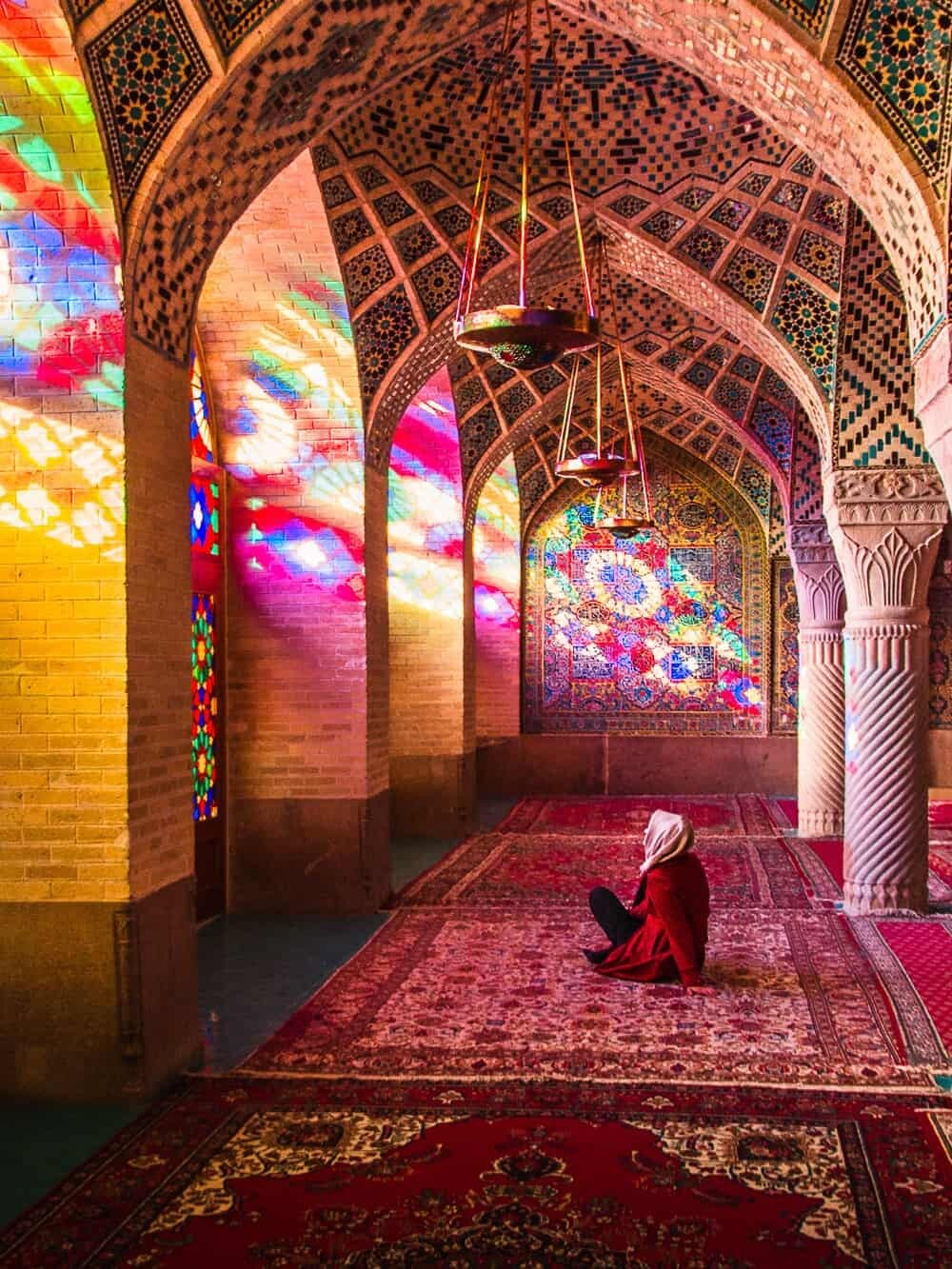
Our line producer Iran desk and film fixers in Iran begin with a project-feasibility file before dates, travel or equipment are committed. The review tests script approval, crew-entry requirements, applicable sanctions and banking controls, insurance, temporary equipment import and location access. It shows which parts of the shoot can proceed, which require confirmation from an authority or specialist adviser, and which must be redesigned before the production budget is locked.
Iran sits within our wider line producer Middle East network, but it is treated as a feasibility-led territory rather than a routine corridor extension. The sections below show how that file is built and what each part settles.

What a Line Producer in Iran Resolves Before the Budget Locks
Every Iran project starts by building one file. Before a date, a ticket or a shipment is committed, the production works through six questions, and if any is unresolved the dates and budget stay provisional.
- Can the script and subject clear cultural review?
- Can every crew member on the call sheet obtain entry?
- Can contracts be signed and payments made under the sanctions and banking rules that apply to the parties?
- Can the equipment package be imported and re-exported correctly?
- Can the production and its territory be insured?
- Can the shortlisted locations be accessed inside the shoot window?
What the Production-Control File Contains
The file is a working document rather than a memo, and it is what a line producer hands the production to lock a budget against. It carries a script and format summary; a crew nationality register; a permit and authority register naming which body controls each approval; the conditions attached to each shortlisted location; an equipment general list; the open export-control questions; the insurance confirmation and its territorial terms; the counterparty-screening status for every entity that will be paid; and a decision log with change-control, so every go, hold or redesign is recorded against the reason for it. Read together, these give the producer the go, hold or redesign conditions in one place, and they are updated as each answer is confirmed rather than assumed.
Kept this way, the file is also the record that protects the production if a decision is later questioned. Because filming in Iran turns on approvals that can change, the change-control log matters as much as the first answers: it shows what was confirmed, by whom and on what date, so a later shift in an advisory, a permit condition or an insurer’s terms is measured against a known baseline rather than a memory.
Film Fixers in Iran: Location Execution Under One Plan
Where the producer owns feasibility and the file, a film fixer in Iran owns the ground. The role runs under the same production plan rather than as a separate operation: confirming that a shortlisted site can be shot on the proposed day and season, handling the Farsi-language coordination required to interpret filings, access conditions and site instructions, reading the conditions each property or authority attaches to access, booking local departments and suppliers, and standing up the permissions and contacts a shoot day needs. Its practical value is that reality from the ground is fed back into the schedule and the budget while there is still time to act on it, and anything touching clearance, cost or safety is raised early with the producer.

Script and Format Feasibility
The first review is the script and the format, because the route to approval is not the same for every kind of production and the value of the review is identifying which route must be confirmed for this project. A narrative feature or series is read for subject and content, and the production plans around the cultural-review outcome. A commercial is often a shorter engagement but can carry brand, product and location sensitivities of its own. A documentary or factual production raises questions of access, contributors and subject that are distinct from a drama. News or media work follows a different accreditation path again. A cultural or heritage project can involve conservation authorities from the outset. None of these should be assumed to share a single permit or visa class; the initial review exists to establish which approval and entry route each one actually needs before anything is scheduled.

The Iran Production Feasibility Matrix
Running a project’s inputs through a single matrix is the quickest way to see where the open questions sit. Each input drives a different question, and the matrix is filled from confirmed facts, not assumptions.
| Project input | What it determines |
|---|---|
| Format | Feature, series, documentary or commercial: shapes the approval route, crew-entry documentation and likely equipment requirements. |
| Subject and script | Whether the project can clear cultural review, which is the first gate. |
| Crew nationalities | Affects consular processing and may introduce additional legal or travel restrictions; sanctions exposure is determined separately by the parties, transactions and jurisdictions involved. |
| Financing jurisdiction | Which sanctions regime and banking rules govern the payments. |
| Equipment origin | The owner, export country, classification, controls and carnet eligibility that decide how the package moves. |
| Locations | The permit layers, access windows and on-ground risk. |
| Insurance | Whether the territory can be covered, and on what terms. |
| Distribution | Downstream clearance and any territory restrictions on the finished film. |
Iran Filming Permits: Project, Crew and Location Layers
Iran filming permits are a stack of separate approvals rather than a single document, and the route is confirmed for the specific project rather than assumed from a template. Foreign productions should confirm the current project-approval and crew-entry route with Iran’s Cinema Organization, the Ministry of Culture and Islamic Guidance and the relevant Iranian mission before scheduling. Project approval, crew entry and site access are separate questions. National approval should not be treated as replacing municipal, heritage, environmental, aviation or security permissions. The required sequence and documents can vary by format, subject, crew nationality and location list, so the layers below are planned in parallel and confirmed individually.
- Project or script review: the cultural clearance of subject and content.
- Crew-entry documentation: the entry and accreditation file for the unit.
- Provincial or municipal requirements: the local permissions beneath any national approval.
- Heritage properties: separate conservation-authority consent for historic and listed sites.
- Protected environments: environmental clearances for parks, reserves and sensitive areas.
- Security-sensitive sites: restricted areas that need specific, and sometimes unavailable, clearance.
- Drone and aerial work: may require separate aviation, security and location approvals, all of which must be confirmed before scheduling.

Crew Visas and Nationality-Specific Planning
Entry is planned around the production file and a nationality audit rather than a published timeline, because the position genuinely differs by passport and by the current diplomatic climate. Every crew member’s nationality is mapped against entry feasibility early, the nationalities requiring additional review are flagged before people are cast or contracted, and the crew-entry or media-visa requirements are confirmed with the relevant mission for the specific project rather than assumed from a single class. Some nationalities face additional scrutiny or restrictions that production planning cannot remove, and those are recorded as constraints. Regulatory and travel information last reviewed: August 2026; this position moves with policy and is re-checked against current requirements before every project.
Sanctions, Contracts and Production Payments
Sanctions screening must be completed before contracts, supplier commitments or payments are approved, and the screening is specific to who is financing, who is being paid and where the money sits. Iran sanctions are administered under more than one regime: OFAC’s Iran sanctions programme applies where there is a United States nexus, while other productions may fall under United Kingdom, European Union, Indian or other applicable restrictions, so the first task is to establish which regimes reach the parties and the transactions.
On that basis, a production runs jurisdiction-specific sanctions screening, counterparty and bank screening for every entity that touches the money, and export-control checks on equipment and controlled technology. It reads insurance exclusions in full, since policies may exclude or restrict territorial cover. Where specialist sanctions or export-control advice is required, obtain it in writing before contracts are signed or payments are initiated. This page does not describe a payment workaround or present any single arrangement as universally compliant, because compliance is specific to the project and its jurisdictions. The broader filming compliance for foreign films position sits alongside this, but the sanctions answer is given by qualified counsel on the facts, before money moves.
Equipment Import, ATA Carnet and Local Sourcing
Moving a camera package into and out of Iran is planned around the equipment, not assumed. The equipment owner, country of export, classification, export controls, carnet eligibility and intended customs entry point collectively determine whether the package can be imported and re-exported correctly. Iran is listed in the ICC ATA Carnet guaranteeing chain, but that does not establish that every shipment, issuing jurisdiction or equipment category will be accepted without additional checks. The production also confirms whether each customs office on the route is operating a paper or digital procedure during the ICC transition, so the document presented matches the process in use.
Before dispatch, the carnet holder confirms eligibility with its own issuing association, screens the equipment for applicable export controls, and has the Iranian customs broker confirm the entry office, representation documents, inspection process and re-export procedure. If a carnet cannot be used, the alternative temporary-import procedure must be confirmed in writing with Iranian Customs before the equipment leaves its country of origin. Local hire is weighed against import throughout, because sourcing inside Iran can remove parts of the customs question, and the digital and paper carnet transition is accounted for so the document in hand matches what the border expects.
Budget and Cash-Flow Architecture
An Iran budget carries lines a routine production does not, and the point here is which lines to open rather than any invented rate. Depending on the project, a producer plans for translation and document preparation; authority and administrative charges where they apply; the local production company; crew and equipment; the customs broker and temporary import; insurance extensions for the territory; legal and sanctions review; security or escorts where a location requires them; medical and evacuation planning; currency and quote-validity assumptions, since the rial moves and quotes expire; and a contingency held outside ordinary production contingency for the delays that permit and travel risk introduce. Because an Iran shoot often sits inside a wider international schedule, these lines are reconciled through multi-country budget consolidation rather than budgeted in isolation.
Two lines deserve particular attention. Quote validity is short, because the rial moves and local suppliers price against it, so a budget built on quotes gathered months ahead is re-confirmed close to the shoot. And the separate territory contingency is sized to the real risks, the permit delay, the weather window and the possibility of a late substitution, rather than folded into the ordinary allowance, so a genuine problem does not consume the buffer the rest of the production depends on.
Iranian Crew and the Tehran Production Base
Iran has a deep, experienced crew base, and the more that is sourced locally the smaller the entry and import surface becomes. Tehran is the principal production base: the principal crew pool, equipment suppliers, production companies and administrative coordination are concentrated there, and most units assemble and stage from the capital before deploying to the regions, from the heritage cities to the central deserts, the Caspian and the Gulf.
Local Sourcing Versus Imported Departments
The sourcing decision is made department by department. The producer confirms which local departments need international-language reporting so the crew integrates with the wider unit; which specialist personnel genuinely have to be imported; where local equipment removes a customs exposure entirely; and where a specialised package justifies temporary import despite the paperwork. Local sourcing can reduce visa and import complexity, but it does not reduce sanctions exposure on its own: Iranian counterparties and transactions still require screening, and local contracts are checked on the same basis as any other.
The reporting-language question is practical rather than cosmetic. A department that reports in a language the wider unit cannot follow becomes a single point of failure on the day, so the decision is not only whether a department can be sourced locally but whether it can report into the production in a form the first assistant and the producer can act on without a translator in the loop for every instruction.
Pre-Production Gates
Rather than fixed timelines, an Iran pre-production runs as a set of gates, and these workstreams can proceed in parallel, but no non-refundable commitment should be released until the relevant approval, entry, insurance, sanctions and equipment gates have cleared.
- Brief and script review, to establish the approval route and the obvious constraints.
- Authority and consular confirmation of the current project and entry route.
- Crew-entry assessment against the nationality register.
- Sanctions, contracting and insurance review with the applicable advisers.
- Equipment and Customs confirmation of the import and re-export path.
- Location-specific filings for each site and its authorities.
- Final production go, no-go or redesign, once the gates above are documented.
How Location Choice Changes the Permit and Risk Plan
Location in Iran moves the permit stack and the risk plan, not only the frame. The table reads each production band by what it delivers on camera and the single issue that most shapes its plan, and the paragraphs that follow set out how each band is actually worked.

| Production band | Visual use | Principal planning issue |
|---|---|---|
| Tehran and Alborz | Urban, modern, mountain and winter | Dense-city access and seasonal conditions |
| Isfahan, Shiraz and Yazd | Persian and heritage architecture | Conservation and visitor access |
| Central deserts | Desert, Mars and historical stand-ins | Heat, transport, medical and communications |
| Caspian region | Forest, mountain and coast | Weather and road movement |
| Persian Gulf islands | Maritime and coloured terrain | Equipment transport and environmental access |
Working the Five Production Bands

Tehran and the Alborz work off the capital as the base, giving urban, modern, mountain and winter material within a short radius; the planning issue is dense-city access and the season, since snow and traffic both move the schedule. The heritage cities of Isfahan, Shiraz and Yazd deliver Persian and historic architecture, and the controlling question is conservation consent and visitor access at protected sites rather than distance. The central deserts read as desert, Mars and historical stand-ins, but they demand real logistics: heat, transport, medical cover and communications have to be built into the day. The Caspian region offers forest, mountain and coast a long way from Tehran, where weather and road movement govern the plan. The Persian Gulf islands give maritime and coloured terrain, with equipment transport and environmental access as the deciding constraints.
Across all five bands the same discipline applies: the base city, the equipment movement, the season and the controlling permission are settled before the band is locked into the schedule. This is where film fixers in Iran carry the plan, because the difference between a band that works and one that slips is usually local, a road that closes with weather, a heritage site that caps crew numbers, or an access window that a distant office controls. The table gives the shape; the ground gives the schedule.

Duty of Care and Change Control
An Iran green light is not the end of the risk work; it is the start of monitoring. Travel advice, insurance terms and site conditions can move after approval, and the production needs a way to respond. The team tracks the travel advisory for every crew member’s government and the insurer’s territorial conditions; keeps medical and evacuation planning current; and holds a defined process for location or crew substitutions and for changes to permit conditions. A named person must be able to stop the production if a gate reopens, and there must be an agreed way to reissue the budget and the schedule after a material change. The production risk and insurance position is reviewed against the advisory rather than assumed to hold for the life of the shoot.
Stop authority must be assigned before travel. Depending on the production, it may sit with the producer, line producer or designated safety lead, with the escalation route recorded in the production-control file.
When Filming in Iran Is Not Yet Viable
Part of the accountability is recommending a delay, a redesign or another territory when the file does not close. A producer will hold or move a shoot when script clearance is doubtful, when a crew nationality creates an entry issue that cannot be resolved in time, when insurance excludes the territory and no acceptable cover can be placed, when equipment cannot legally move, when payment or contracting cannot be cleared under the applicable sanctions, or when the schedule lacks the contingency the permit and weather risk demand.
Current government travel advice is a separate production gate. Before approving crew travel, the producer should check the advisory issued by every crew member’s government, such as India’s Iran travel advisory, together with the insurer’s territorial conditions and the production’s medical and evacuation cover. A permit or visa does not override a travel advisory or make an excluded territory insurable. Where an Iran plan cannot close, the territory-selection question is worked through our MENA production hub, which sets out how a comparable shoot is modelled elsewhere in the region.
Engaging the Iran Production Team
A useful feasibility response needs the project’s real inputs. To assess whether filming in Iran is viable, the team works from the script or treatment, the format and distribution plan, the crew nationalities, the shoot window, the location references, the equipment origin, the contracting jurisdiction and the insurance position.
Submit these inputs for an initial Iran production-feasibility assessment before committing cast, travel or equipment. With them, a line producer in Iran can return a preliminary production-feasibility note identifying the proposed permit path, crew-entry issues, the equipment plan, the schedule dependencies and the questions that require confirmation from Customs, the insurer, the relevant consulate or qualified sanctions counsel.
