

What a Completion Bond Means in Film Production
A completion bond in film production is a financial guarantee that ensures a project will be finished and delivered according to an approved budget and schedule. It protects investors, lenders, and distributors against non-delivery. If the production exhausts its funds or fails to meet contractual milestones, the bond company is obligated to intervene. That intervention may involve injecting additional capital or assuming control to complete the film. Structurally, the bond transfers delivery risk away from financiers and onto a specialized guarantor. For productions requiring structured support, film production insurance India is available for this region.
In international projects especially, the completion bond operates within a broader financial oversight ecosystem. It connects to execution controls that regulate budgeting discipline, reporting standards, and compliance sequencing. This relationship aligns with Global Execution Architecture in Film Production where financial supervision integrates with operational governance to protect delivery integrity across jurisdictions.
Before issuing a bond, the guarantor conducts extensive due diligence. Scripts, schedules, budgets, financing structures, and key crew appointments undergo evaluation. The guarantor assesses contingency buffers, completion feasibility, and exposure thresholds. Only after this assessment confirms structural viability does the bond company provide its guarantee. The approval process itself functions as a secondary layer of financial validation.
Lenders and studios require completion bonds because film production carries high volatility. Schedule shifts, weather interruptions, talent disputes, permit delays, and cost overruns can rapidly destabilize budgets. A bond provides contractual assurance that these disruptions will not prevent completion. For banks, this assurance protects loan recovery. For distributors, it protects delivery obligations tied to pre-sales or licensing agreements.
Guarantor companies are financial risk managers rather than creative stakeholders. Their mandate centers on cost containment and schedule adherence. Through regular cost reports, variance tracking, and milestone reviews, they monitor whether the project remains within approved parameters. If financial deviations exceed tolerance levels, the guarantor possesses contractual authority to intervene. That intervention right, which can extend to replacing the director when delivery is at risk, makes the guarantor one of the most decisive holders of veto power on a film set, even though it is rarely present on the floor.
Completion Guarantee vs Production Insurance
Completion bonds and production insurance serve distinct structural purposes. Production insurance covers defined risks such as equipment damage, injury, or property loss. It compensates for specific events. A completion guarantee addresses the broader risk of non-delivery. It is performance-oriented rather than incident-based.
Insurance reimburses measurable loss after occurrence. A bond ensures the film reaches completion despite disruption. Insurance providers do not direct production operations. Bond companies, however, may exercise intervention authority if financial integrity deteriorates.
Financial exposure boundaries differ accordingly. Insurance policies operate within event-specific caps. Completion bonds assess total negative cost exposure. If required to protect delivery, guarantors may allocate additional funds within the framework of completion efficiency. Their authority is tied directly to safeguarding final delivery.
Who Controls the Bonded Production
Control of a bonded film remains with producers and line producers as long as financial discipline is maintained. However, oversight intensifies under bonding conditions. The guarantor typically requires standardized reporting, including periodic cost statements, revised forecasts, and schedule tracking documentation.
Intervention triggers are predefined in the bond agreement. If contingency reserves are exhausted, if delays threaten contractual delivery dates, or if financing gaps appear, the guarantor may initiate corrective measures. These measures can include restructuring schedules, limiting discretionary spending, or replacing key personnel.
Delivery triggers are central to bond authority. Agreements often specify required deliverables such as a completed master, cleared rights documentation, insurance compliance, and contractual certifications. If delivery becomes compromised, the guarantor may assume operational control to ensure completion.
A completion bond therefore embeds conditional authority within film production. Creative control continues under stable conditions, but financial enforcement mechanisms remain active beneath the surface. In multi-country productions, this layered governance becomes a structural safeguard rather than an optional financial instrument.

Why Completion Bonds Become Complex in International Film Production
International productions multiply the variables that a completion bond must evaluate. A single-country film operates within one regulatory framework, one currency environment, and one primary labor regime. By contrast, an international structure distributes risk across jurisdictions, each with its own legal standards, compliance systems, and financial exposures. A completion bond in film production must therefore account not only for budget accuracy, but for structural instability across borders.
Multi-country regulatory exposure introduces layered uncertainty. Labor laws vary in working hour restrictions, union obligations, overtime rules, and termination protections. Import regulations for equipment differ. Insurance thresholds are not harmonized. A bonded production operating across three territories may face three separate compliance review systems. The guarantor must assess whether these overlapping obligations can be managed without schedule slippage or cost escalation.
Political risk compounds this exposure. Administrative changes, permit delays, or shifting policy positions can directly affect delivery timelines. In emerging markets especially, regulatory interpretation may shift during production. Completion guarantors evaluate not just present compliance conditions, but the likelihood of regulatory continuity. The more jurisdictions involved, the more fragile schedule assumptions become.
Currency Risk and Budget Drift
Currency fluctuation represents one of the most immediate destabilizers in international film production, and it is why a guarantor scrutinises an unhedged position so closely, the exposure examined in currency volatility in production routing. When budgets are approved, they are often constructed in a base currency such as USD or EUR. However, production expenses may be incurred in local currencies across multiple territories. Exchange rate volatility can erode contingency buffers quickly.
Locked exchange arrangements reduce exposure but increase upfront cost. Floating currency exposure preserves flexibility but introduces uncertainty. A completion bond must assess whether currency hedging strategies are in place and whether contingency reserves are sufficient to absorb adverse shifts. If not, even a well-planned production may drift beyond approved thresholds.
Budget drift becomes especially pronounced when principal photography spans months across regions. Small percentage changes in exchange rates can translate into substantial overages when aggregated across crew wages, location fees, accommodation, and logistics. Guarantors therefore examine currency strategy as closely as they examine line-item discipline.
Midway through contractual structuring, cross-territory legal alignment becomes critical. Complex international financing often depends on maintaining enforceable symmetry between agreements, a principle explored in Cross-border contract symmetry within film production. Without contractual balance, enforcement gaps can undermine recovery rights, increasing bond exposure.
Incentive Reliance and Delivery Pressure
Tax incentives frequently underpin international financing models. Many projects rely on anticipated rebates or cash-back programs to close their financing plan. However, incentive disbursement rarely occurs immediately upon wrap. Governments may require audit certification, cultural tests, or extended review cycles before releasing funds.
If incentive timing assumptions are misaligned with debt repayment schedules, liquidity pressure emerges. A completion bond must evaluate not only whether a rebate is approved in principle, but whether its timing aligns with lender expectations. Delayed disbursement can create temporary financing gaps that require bridging arrangements.
Government disbursement risk also varies by jurisdiction. Some territories maintain predictable payout histories. Others experience backlog cycles or administrative slowdowns. Guarantors factor in historical performance data when determining risk premiums and intervention thresholds.
Jurisdictional Compliance Overlaps
International shoots often trigger overlapping compliance systems. A production may need to satisfy one country’s labor codes while simultaneously meeting another country’s co-production treaty requirements. These overlapping obligations increase reporting complexity and elevate the probability of procedural error.
Permit sequencing further complicates matters. Certain jurisdictions require tax registration before labor onboarding. Others demand environmental clearance before location booking. If sequencing is mismanaged, cascading delays follow. Completion bond providers scrutinize production calendars to ensure that regulatory dependencies are logically structured.
Ultimately, complexity arises from compounded interdependence. Each additional country increases financial exposure, compliance layering, and administrative friction. For a completion bond in film production, international scale does not merely expand geography; it multiplies structural risk.

Bond Oversight vs Line Producer Authority
In a bonded production, authority is layered rather than centralized. Operational control typically rests with the line producer and the producing team, while financial assurance rests with the guarantor. Understanding these execution boundaries is critical, particularly in complex structures where oversight and delivery intersect, as examined in What line producer controls vs film commission. A completion bond in film production does not replace the production hierarchy; it overlays a financial supervision mechanism.
The chain of command in bonded projects follows contractual allocation of responsibility. Producers remain responsible for creative direction and overall financing. The line producer manages daily budgeting, logistics, crew coordination, and vendor payments. The executive producer typically oversees financing alignment and investor communication. The bond company, however, monitors compliance with the approved budget and schedule.
Bond company reporting structures formalize this oversight. Weekly cost reports, variance analyses, and revised cash-flow forecasts are submitted to the guarantor. These documents are not advisory; they are contractual instruments. If cost projections exceed contingency reserves or if delivery milestones appear threatened, the guarantor’s authority may escalate.
Financial Control Triggers
Financial control triggers are predefined thresholds written into the bond agreement. A common trigger is a cost variance exceeding an agreed percentage of the negative cost. Another is schedule overrun beyond defined delivery milestones. When these triggers activate, the guarantor is contractually entitled to demand corrective action.
Schedule overruns often carry compounding consequences. Extended location rentals, talent availability conflicts, and equipment rescheduling fees can rapidly erode remaining reserves. The guarantor evaluates whether recovery plans are credible. If internal production management cannot restore equilibrium, oversight intensifies.
Variance thresholds are not purely mathematical. They are contextual. A modest overrun early in production may be manageable if recovery measures are viable. However, overruns near the end of principal photography present higher risk because fewer corrective options remain. Completion bond monitoring therefore increases in intensity as production progresses.
When Guarantors Step In
Intervention scenarios occur when corrective measures proposed by producers fail to stabilize the budget or timeline. The first step often involves spending freezes on non-essential line items. Discretionary expenditures, optional reshoots, or creative upgrades may be paused to preserve liquidity.
If financial exposure continues to expand, the guarantor may require restructuring of operational leadership. Personnel replacement authority is one of the most consequential powers embedded in a completion bond in film production. In extreme cases, the bond company can replace the line producer or key production personnel to protect delivery obligations.
Replacement risk introduces strategic discipline into daily management. Producers understand that continued deviation from the approved plan can result in partial loss of operational autonomy. However, guarantor intervention is typically a last resort. Bond companies prefer stabilization over disruption because replacement itself carries cost and reputational implications.
Ultimately, bonded productions operate on conditional autonomy. The line producer retains control so long as financial parameters remain intact. The guarantor remains in the background, observing rather than directing. Yet beneath that surface lies a structured enforcement mechanism. The completion bond does not manage creativity, but it protects delivery. That protection reshapes authority boundaries without dismantling the production hierarchy.

Completion Bonds and Global Incentive Structures
Completion bonds influence how incentive-driven financing models are structured. In territories offering cash rebates or tax credits, financiers often treat projected incentives as part of the repayment stack. However, those projections are contingent on compliance. A completion bond in film production therefore intersects directly with rebate eligibility, because failure to meet delivery conditions may invalidate expected government returns.
Pre-sales and gap financing increase this complexity. When international distributors commit minimum guarantees in advance, lenders rely on contractual delivery. Similarly, when banks advance funds against anticipated incentives, they require assurance that qualification thresholds will be met. The completion guarantor evaluates these revenue assumptions during underwriting. If incentive rules appear unstable or politically exposed, risk ratings increase.
Government guarantee requirements also vary by jurisdiction. Some territories demand local audits, cultural qualification tests, or minimum domestic spend ratios before rebate approval. These structural conditions shape the guarantor’s risk assessment. Incentives are not treated as automatic receivables; they are conditional assets tied to compliance performance.
Midway through financing modeling, producers must evaluate how different jurisdictions structure rebate protection and audit rigour, which varies widely from market to market. The more complex the compliance matrix, the more conservative bond conditions become.
Structured drawdowns reflect this caution. Funds are released in stages, often aligned with production milestones such as completion of principal photography or submission of audit-ready documentation. The guarantor monitors whether incentive documentation is being assembled concurrently rather than deferred until wrap.
Incentive-Backed Financing Models
Incentive-backed financing frequently relies on short-term cash-flow bridges. Banks advance funds against anticipated rebates, expecting repayment once government disbursement occurs. The completion bond supports this structure by ensuring the project reaches eligibility thresholds.
Audit dependencies are central to this model. Most rebate systems require independent cost verification. If documentation fails audit, incentive value may be reduced. The guarantor therefore insists on standardized accounting systems and controlled spend tracking. This is not administrative preference; it protects repayment projections embedded in the financing plan.
Timing mismatches also present risk. Rebates are often disbursed months after completion. During this interval, lenders remain exposed. The completion bond mitigates this exposure by guaranteeing delivery, which is typically a prerequisite for final rebate certification.
Bond Conditions Attached to Incentives
Bond conditions frequently attach directly to incentive qualification metrics. Documentation compliance becomes a monitored variable. If production deviates from approved local spend ratios or misclassifies qualifying expenditures, the guarantor may require corrective accounting adjustments.
Spend qualification risk is particularly acute in multi-country shoots. Each jurisdiction defines eligible costs differently. Failure to segregate accounts accurately can compromise rebate claims. In such scenarios, the completion bond does not simply guarantee physical delivery; it indirectly safeguards incentive recovery.
Ultimately, global incentive structures convert creative projects into compliance-sensitive financial instruments. The completion bond in film production functions as a stabilizing mechanism within that system. It does not create eligibility, but it enforces the discipline necessary to preserve it.
Multi-Territory Payroll, Audit, and Completion Risk
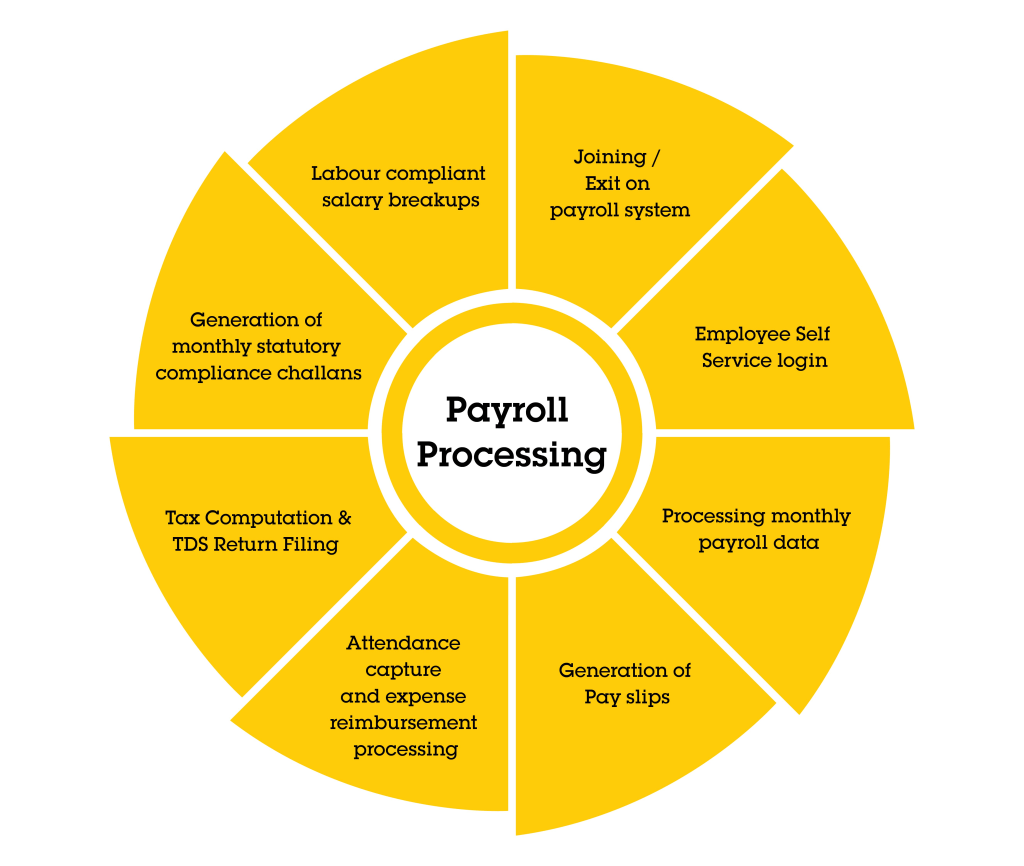
Multi-territory productions introduce payroll structures that are inherently fragmented. Cast and crew may be engaged under different legal entities, across separate tax regimes, and subject to varying labor standards. A completion bond in film production must therefore evaluate payroll architecture as part of its financial risk assessment. Inconsistent reporting, delayed remittances, or misaligned withholding practices can destabilize budget forecasts and trigger bond oversight.
When projects span jurisdictions, reconciliation systems become central to financial stability. Payment schedules, currency conversions, and statutory deductions must be tracked across parallel accounting environments. These reconciliation dynamics are examined structurally in Multi-territory payroll reconciliation systems, where compliance logic determines how payroll integrates into broader production finance controls. Without disciplined consolidation, even minor discrepancies can accumulate into material exposure.
Union versus non-union exposure further complicates payroll modeling. Union agreements often mandate specific wage floors, overtime thresholds, and residual structures. Non-union jurisdictions may operate with flexible rates but weaker documentation standards. In bonded productions, inconsistencies between these systems require harmonized reporting. The guarantor expects standardized cost summaries that reconcile contractual obligations with actual disbursements.
Tax withholding inconsistencies present additional risk. Some jurisdictions require employer-side contributions, others mandate employee withholding adjustments. Misapplication of statutory deductions can result in post-production liabilities. Because completion bonds guarantee final delivery within an approved budget, unforeseen tax claims may create overruns. Transparent audit trails reduce this probability.
Payroll Fragmentation Risk
Payroll fragmentation typically arises when local vendors handle payments independently. While this approach may simplify on-ground logistics, it increases reconciliation complexity. Vendors may operate under different reporting cycles, formatting standards, or compliance interpretations. Consolidating these streams into a unified cost report demands disciplined oversight.
Cross-border remittances add currency exposure and regulatory compliance layers. Delays in transferring funds between territories can distort cash-flow timing. Additionally, banking regulations may impose documentation requirements that affect payroll release schedules. In bonded projects, such delays must be forecast and incorporated into risk modeling.
Audit Exposure in Bonded Projects
Completion cost certification depends on accurate payroll accounting. Guarantors require clear evidence that labor costs align with approved budgets. Discrepancies between contracted rates and actual disbursements may trigger review thresholds.
Documentation control is therefore not administrative detail; it is structural protection. Payroll registers, tax filings, union confirmations, and remittance records must be traceable. If a project cannot substantiate its labor spend, final certification may be delayed. In a bonded structure, that delay can escalate into intervention.
Multi-territory payroll systems thus operate as a financial pressure point within international productions. Where reconciliation discipline is strong, completion risk remains contained. Where fragmentation persists, exposure expands beneath the surface of otherwise compliant budgets.

When Completion Bonds Fail in International Productions
Completion bonds are structured as financial safeguards, yet they are not immune to structural failure. In international productions, failure rarely results from a single catastrophic event. Instead, it emerges from accumulated weaknesses across budgeting, compliance, and regulatory forecasting. When multi-country exposure is underestimated, even a formally bonded project can collapse into financial dispute.
Under-budgeting across jurisdictions is a common trigger. Producers may model primary photography accurately in one country but underestimate secondary costs elsewhere. Differences in labor compliance, local taxation, or transport logistics can inflate expenses beyond contingency thresholds. Once reserve buffers are exhausted, guarantor intervention intensifies. If corrective measures cannot stabilize delivery, the bond structure itself becomes strained.
Overreliance on incentives compounds this exposure. Productions sometimes forecast rebates as near-certain revenue rather than conditional reimbursements. Delays in government disbursement, audit disputes, or ineligible expenditure claims can disrupt cash flow. If a financing plan depends on incentive timing that fails to materialize, completion guarantees face liquidity pressure.
Midway through such breakdowns, governance gaps often surface. Cross-border regulatory fragmentation can produce delays that cascade across departments. These systemic weaknesses are explored in Permit governance architecture in emerging markets, where sequencing failures and unclear authority layers destabilize production timelines. When permits stall or compliance documentation is incomplete, schedules slip beyond insured thresholds.
Governance Gaps Across Countries
Permit sequencing breakdown is a frequent destabilizer. A production may secure national approvals but overlook municipal or environmental clearances. In federated systems, parallel authority structures can generate contradictory requirements. Delayed authorization in one territory can invalidate shooting windows in another.
Regulatory blind spots further increase exposure. Productions operating across emerging markets sometimes assume procedural uniformity. However, local labor codes, customs documentation, or security regulations may require additional filings. If these are discovered late, production halts can trigger contractual penalties and overrun costs.
Investor Protection Escalation
When financial exposure escalates beyond manageable limits, investor protection mechanisms activate. Bond agreements contain default triggers tied to budget variance, missed milestones, or failure to deliver contractual materials. If those triggers are breached, guarantors may assume operational control or initiate structured shutdown procedures.
Asset recovery mechanisms then become relevant. Guarantors seek to preserve salvage value through partial completion, sale of underlying rights, or negotiated settlements with distributors. Investor litigation may follow if stakeholders believe material information was withheld during underwriting.
Completion bond failure in international production therefore reflects structural breakdown rather than singular misfortune. It reveals how fragile multi-territory coordination becomes when governance, incentives, and budgeting are misaligned.

Completion Bond Logic as Governance Architecture
A completion bond in film production operates as more than a financial safeguard. It functions as a structural control system embedded within the governance architecture of a project. While often described as a guarantee, its deeper role lies in shaping how risk is monitored, escalated, and corrected. In international productions, this logic becomes foundational rather than optional.
Bond oversight integrates directly into global execution planning. Budget approvals, schedule validation, reporting frequency, and contingency allocation are calibrated before cameras roll. The guarantor does not simply insure an outcome; it embeds conditional authority beneath the production hierarchy. This authority activates if financial discipline erodes. As a result, completion bond logic becomes inseparable from execution strategy.
International productions require layered guarantees because exposure multiplies across jurisdictions. Currency volatility, permit sequencing, labor variation, and incentive dependency create overlapping risk layers. A completion bond aligns these layers under a single performance guarantee. It ensures that financing partners remain protected even if local disruptions occur.
Bond Logic Within Execution Corridors
Within execution corridors, the completion bond stabilizes multi-country viability. Corridor stability depends on predictable sequencing, transparent reporting, and enforceable intervention rights. When a project spans multiple territories, small miscalculations can escalate rapidly. The bond introduces structured monitoring that detects deviation early.
Multi-country viability depends on coherence between contractual obligations and operational execution. If cross-border alignment weakens, the guarantor’s oversight framework becomes the final containment layer. In this way, completion bond logic reinforces corridor credibility. It signals to lenders and studios that governance is not fragmented but centrally enforced.
Conclusion
A completion bond in film production remains fundamentally a financial guarantee. It protects investors, lenders, and distributors against delivery failure. However, in international production environments, its significance expands beyond simple assurance. It becomes a governance mechanism embedded within financial architecture.
Multi-country production multiplies complexity. Regulatory variation, currency exposure, labor differences, and incentive dependencies create structural volatility. Without layered guarantees, this volatility can destabilize financing structures. A completion bond consolidates these exposures into a managed framework, converting uncertainty into monitored performance risk.
The integration of bond logic with global execution planning is therefore strategic. It reinforces reporting discipline, enforces budget adherence, and preserves delivery timelines. For international producers, the decision to bond a project is not merely a financing requirement. It is a structural choice that aligns governance, capital protection, and operational control.
In an era of expanding cross-border production, layered guarantees define corridor credibility. Completion bonds do not eliminate risk, but they formalize how risk is governed. That distinction separates speculative international ventures from structured global productions built for delivery reliability.
