
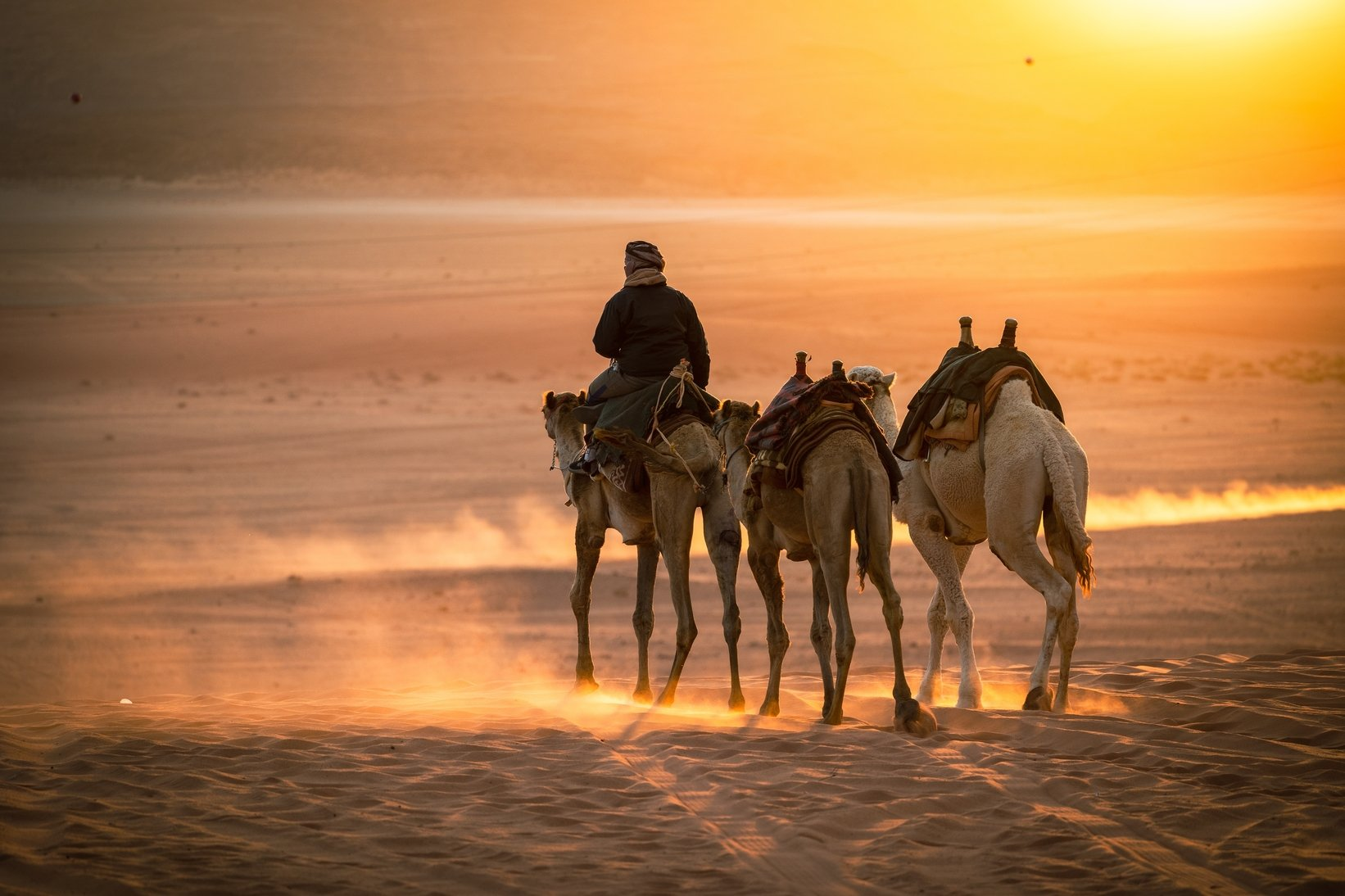
Jordan production support for international shoots is built on sixty years of infrastructure — and that track record is what separates it from territories that lack crew networks, permitting infrastructure, and a functional production base. RFC incentives, Aqaba port access for equipment import, established local crew, and a fully operational capital base in Amman sit behind every shoot that arrives here.
This page maps the production support architecture: what runs through the capital, what runs as a day-trip from the hub, and what requires a handoff to regional fixers in the interior. All of it is coordinated through a line producer Jordan, who holds the RFC relationship and dispatches regional fixers as the schedule moves out of Amman.

Filming Amman — Locations Within the Capital
Amman’s own filming environments are underused relative to their quality. The capital carries Ottoman laneways, a first-century Roman theatre, a Byzantine-era citadel, and dense urban street texture — all accessible without overnight logistics, all permit-manageable from the Amman production base. For ad films, OTT drama, and any brief requiring Levantine urban or Roman-era architecture, the capital corridor eliminates the location travel entirely.
Rainbow Street and Jabal Amman
Rainbow Street runs east from the First Circle through Jabal Amman — one of the city’s oldest residential hills. The streetscape is Ottoman and early 20th-century: sandstone-fronted buildings, narrow paved lanes, vaulted doorways, iron balconies, and garden villas from the 1920s and 1930s that now house galleries, independent cafés, and arts organisations. The RFC office itself is located on Rainbow Street — a detail that speaks to the street’s position inside the production infrastructure, not just the tourism circuit. For a production needing Levantine urban exterior, Ottoman residential lanes, or contemporary Middle Eastern street texture, Rainbow Street delivers without the crowd management overhead of the city centre. GAM permit applies; lead time 7–10 working days.
Old City Bylanes and the Roman Theatre

The Roman Theatre in downtown Amman was built between 138 and 161 CE under Antoninus Pius — a 6,000-seat amphitheatre cut into the face of Jabal al-Joufah that remains structurally intact and operationally active. Alongside it sits the Odeon (a smaller 500-seat Roman theatre, also 2nd century CE) and the Nymphaeum — a Roman public fountain built in 191 CE. All three Roman-period structures sit within walking distance of each other in the Balad (downtown) area. The surrounding old city bylanes carry the organic street texture of a working Arab city centre — souq alleys, traditional shopfronts, dense human movement. For productions needing Roman civic architecture, the theatre exterior and Odeon provide a fully intact Mediterranean Roman environment without reconstruction. Permits via the Greater Amman Municipality (GAM) and Department of Antiquities; combined access is available under a single production request.
Amman Citadel — Temple of Hercules and Umayyad Palace

The Amman Citadel (Jabal al-Qala’a) sits on the highest of Amman’s seven hills and carries four distinct historical layers in a single location: Bronze Age foundations, the Temple of Hercules (161–166 CE — two massive Corinthian columns and the carved hands of Hercules remain standing), a Byzantine church (5th–6th century CE), and the Umayyad Palace complex (8th century CE, partially reconstructed). The hilltop position gives the Citadel an unobstructed view across downtown Amman — the Roman Theatre directly below, the city spreading in all directions. For productions requiring Roman epic, early Byzantine, early Islamic, or multi-era Levantine settings, the Citadel places each era within 200 metres of the next. Permits via the Department of Antiquities; access windows for filming are manageable within standard production scheduling. Crowd management is straightforward — access is limited to a single hilltop path, making it the most controllable filming environment in the central city.

Day-Trip Corridor — Locations Within 1 Hour of Amman
Effective Jordan production support makes full use of the capital’s same-day location radius. Six locations fall inside it. All are accessible with no overnight stay required — transport, permits, and crew logistics run from the capital production base. No regional fixer engagement, no location accommodation overhead.
| Location | Distance | Drive Time | Permit Authority | Overnight |
|---|---|---|---|---|
| Madaba (Byzantine mosaics) | 30 km south | ~30 min | Municipality / church | No |
| Mt. Nebo (panoramic plateau) | 35 km southwest | ~40 min | Franciscan Custody | No |
| Baptism Site — Al-Maghtas | 50 km west | ~50 min | Jordan Tourism Board | No |
| Dead Sea shoreline | 60 km west | ~1 hr | Resort / private land | No |
| Jerash (Roman city) | 48 km north | ~45 min | Department of Antiquities | No |
| Ajloun Castle | 76 km northwest | ~1 hr 15 min | Department of Antiquities | No |
Jerash — Colonnaded Roman City, 48km North
Jerash is one of the best-preserved Roman provincial cities outside Italy — the colonnaded Cardo Maximus, the Oval Plaza, the Temple of Artemis, and the South Theatre are all standing and structurally intact. The site is 48km north of Amman, approximately 45 minutes by road. Permit access for filming is managed through the Department of Antiquities; unlike the Roman Theatre in downtown Amman, Jerash requires site-specific access scheduling to coordinate with visitor management. Productions using Jerash typically plan a half-day or full-day shoot window and return to Amman base the same evening. The scale and condition of the Jerash colonnaded street makes it one of the most usable Roman urban environments in the Middle East for production — wider shooting lanes, fewer access constraints, and better vehicle access than comparable sites in Europe.
Dead Sea and Baptism Site — 55–60km West

The Dead Sea is 430 metres below sea level — the lowest filming environment on Earth. The Jordan shoreline carries white salt crystal formations at the water’s edge, mineral-toned water in blues and greens, and the Jordanian hills as the eastern backdrop. For productions needing a surreal or otherworldly shoreline, hyper-saline water, or low-altitude atmospheric conditions, there is no comparable location accessible from a capital city base within one hour. Established resort properties along the Jordanian Dead Sea shoreline provide production vehicle access, crew facilities, and location management that is absent from the Israeli side. The Baptism Site (Al-Maghtas, UNESCO World Heritage, 50km from Amman) — identified as the location of Jesus’s baptism — provides river landscape, excavated Byzantine church ruins, and a permit framework managed by the Jordan Tourism Board. Both are same-day shoots from Amman.

Distant Clusters — Petra and Wadi Rum Require Regional Fixers
Petra and Wadi Rum are not day trips. The distances, permit structures, and on-ground access requirements at both locations sit outside what the production base can efficiently manage. Both require overnight accommodation, dedicated permit relationships the hub does not hold, and on-ground fixer presence the capital cannot provide remotely.
Both clusters require separate operational systems:
| Location | Distance | Drive Time | Why Overnight | Permit Authority |
|---|---|---|---|---|
| Petra | 230 km south | ~3 hrs (Desert Highway) | Key monument access windows: before 07:00 or after 17:00 only in high season — any Treasury/Siq shoot requires overnight in Wadi Musa | PDTRA — Petra Archaeological Park (PAP permit) |
| Wadi Rum | 330 km south | ~4 hrs (via Aqaba road) | Base camp inside the Protected Area — 8hrs round-trip driving for a 4–5 hour shoot window is operationally unviable; crew stays in Bedouin camp | WRPAA + AEZA + RFC — three separate authority approvals |
Petra — PAP Permit, Pre-Dawn Access, Wadi Musa Base
The Petra Archaeological Park (PAP) is managed by the Petra Development and Tourism Region Authority (PDTRA). Filming the Khazneh (Treasury), the Siq, or the Monastery requires PDTRA permit approval and access scheduling around visitor movement — in high season, key monument access is restricted to before 07:00 or after 17:00. A pre-dawn shoot window at Petra combined with a three-hour drive from the capital makes overnight accommodation in Wadi Musa a production necessity, not an option. The Jordan film fixers network holds the PDTRA relationship, manages local crew, and handles Wadi Musa accommodation — the production base dispatches the Petra fixer and maintains RFC documentation continuity across both locations.
Wadi Rum — Three-Authority System, Bedouin Camp, Interior Access
Wadi Rum operates under a three-authority permit structure: the Wadi Rum Protected Area Authority (WRPAA) for site access, the Aqaba Economic Zone Authority (AEZA) for the Aqaba Governorate framework, and the RFC for production registration and rebate documentation. All three run on separate approval timelines and cannot be compressed into each other — a production that starts the Wadi Rum permit chain less than eight weeks before the shoot is carrying real scheduling risk.
The base camp for Wadi Rum productions sits inside the Protected Area itself, managed by Bedouin camp operators with established relationships with the WRPAA. Crew accommodation, vehicle access routes across the valley floor, and community agreements for filming in specific terrain zones are all handled by the local fixer and Bedouin camp network. None of this is manageable from the capital. The production fixer Amman holds the RFC registration and rebate documentation thread; the Wadi Rum fixer holds the on-ground authority relationships that determine whether the shoot happens.
RFC Rebate — Why the Claim Anchors to Amman
The Royal Film Commission (RFC) offers a 25% base cash rebate on qualifying Jordan-side production expenditure. Productions meeting additional local spend thresholds — crew ratios, accommodation booked within Jordan, qualifying service spend — qualify for up to a further 20% uplift, bringing the total rebate to up to 45% of qualifying expenditure. The RFC manages the rebate programme from its office on Rainbow Street in the capital.

Why Amman Is the Rebate Documentation Anchor
RFC rebate eligibility is built on Jordan-side expenditure being separated from international budget lines at the point of spend. This is not a post-wrap accounting exercise — it is a pre-production structural decision. Productions that run Amman crew contracts, hotel bookings, permit fees, and local equipment hire through a single international payroll lose rebate eligibility because the Jordan-specific spend cannot be cleanly extracted at audit. The Amman production entity — the registered production office in the capital — is the entity through which qualifying spend flows. That is the structural reason every Jordan production, regardless of where it shoots, is anchored to Amman. Wadi Rum may be the camera location; the RFC documentation for that shoot is filed, tracked, and submitted from the Amman office. Full rebate mechanics and qualifying spend categories are covered in the film permission in Jordan guide.
Engaging a Line Producer for Jordan
Full Jordan production support — from RFC pre-approval through to regional fixer dispatch — is coordinated through the line producer. The line producer Jordan role covers RFC pre-approval registration, all Amman-based permit applications, Aqaba port equipment import, local crew contracting, and production office setup — as well as the dispatch and coordination of regional fixers for Petra and Wadi Rum. RFC rebate pre-approval must be in place before principal photography begins. The engagement timeline for a Jordan production with both capital and interior location components is a minimum of twelve weeks before shoot start.
Productions running a multi-location Jordan schedule — Amman city, day-trip corridor, and interior desert or heritage — operate across three distinct management layers. The hub handles everything within the capital’s orbit. Regional fixers activate for the distant clusters. The RFC documentation thread runs through the Amman production entity for the full duration of the shoot, regardless of which locations are used.
